Source ATX Fan Style NAS Enclosure for Servers, Workstations, and Storage
Find 30 ATX fan style NAS enclosure options from verified suppliers. Compare specifications including material, color, and power supply configurations for server and storage applications.
Key considerations
Products List






Comprehensive Sourcing Guide
Strategic Sourcing Guide for ATX Fan-Style NAS Enclosures
Defining the Technical Scope and Form Factor Requirements
When initiating a procurement strategy for an ATX fan-style NAS (Network Attached Storage) enclosure, the primary objective is to align the physical chassis specifications with the intended server architecture. The core keyword "ATX fan style" implies a specific structural requirement where the enclosure must accommodate ATX motherboards while integrating active cooling solutions via fans. Based on observed market data, the material composition for such units frequently utilizes Aluminum or Aluminum Alloy, which offers a balance between thermal conductivity and structural rigidity. This is critical for dissipating heat generated by multiple storage drives and the motherboard components within a confined space.
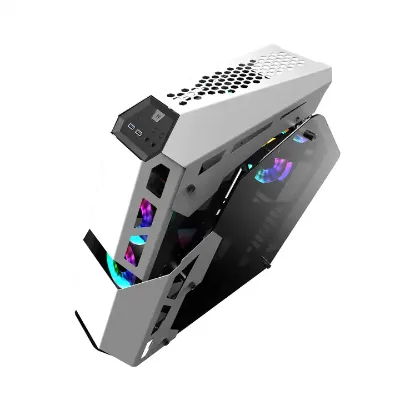
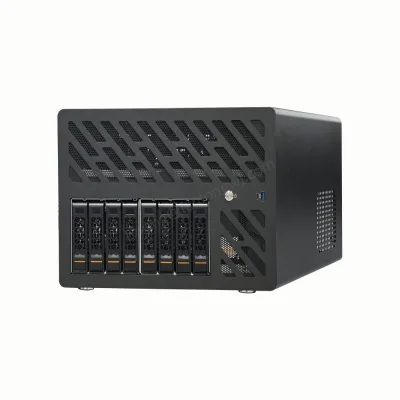
The form factor is equally significant. While some listings indicate a "Vertical" orientation, others specify a "Tower" style. The vertical configuration often maximizes floor space in data centers or server rooms, whereas the tower style may offer different airflow dynamics. A crucial technical attribute to verify is the "Single Gross" weight, which for certain aluminum models can reach 4.000kg. This weight is a proxy for the thickness of the steel plates or aluminum alloys used; a heavier unit often suggests a more robust chassis capable of supporting heavy graphics cards or multiple hard drives without flexing. Buyers must also confirm the "Maximum Length of Graphics Card," which in some observed specifications ranges from 300-400mm. This dimension is vital if the NAS enclosure is intended to host a GPU for transcoding or virtualization tasks, ensuring the card fits within the internal bay without obstructing drive bays or power supply units.
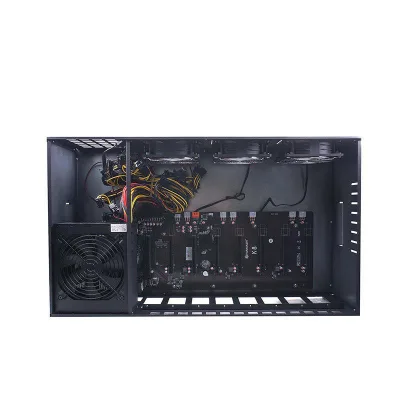
Furthermore, the internal layout must support the "Motherboard" count, with some units explicitly designed to support up to four motherboards, suggesting a multi-node server capability. The "Type" of the enclosure, whether classified as a "Rack" or "Tower," dictates the mounting method. If the procurement is for a standard rack environment, the unit must adhere to specific rack-mount standards, though the observed data highlights a "Vertical" type with "ATX" compatibility, which often points toward a standalone or rack-mountable tower design. The presence of "Cable Management" features, such as back cable management, is a non-negotiable technical specification for maintaining airflow efficiency and preventing dust accumulation, which can lead to overheating in high-density storage environments.
Compliance, Certification, and Material Standards
In the B2B procurement of server hardware, compliance with international standards is not merely a regulatory formality but a prerequisite for operational stability and insurance coverage. The material properties of the enclosure directly influence its certification status. Observed data indicates that the base material for certain components may require "FR-Certification," referring to Flame Retardant properties, which is essential for preventing fire hazards in server rooms. Additionally, the supply chain must provide evidence of compliance with "RoHS" (Restriction of Hazardous Substances), "CCC" (China Compulsory Certification), and "ISO" standards. These certifications ensure that the aluminum or steel plates used do not contain lead, mercury, or other hazardous materials, and that the manufacturing process meets quality management benchmarks.
When evaluating suppliers, buyers must verify the "Products Status" to ensure items are "Stock" rather than custom-built, which can impact lead times and availability. The "Place of Origin" is another critical compliance factor. While many products originate from "Guangdong, China," others may be listed as "Hunan, China." Understanding the regional manufacturing capabilities helps in assessing the supply chain's resilience and the likelihood of consistent quality control. The "prod_standard" field, which in some contexts lists numerical values like "2" or "537301536mm," serves as a reference for physical dimensions and structural standards. Buyers should treat these as specific model references rather than universal standards and request the full technical datasheet to confirm that the enclosure meets the specific safety and performance standards required by their local jurisdiction.
The "OEM/ODM" (Original Equipment Manufacturer/Original Design Manufacturer) status is also a key compliance indicator. Some listings confirm "Acceptable" customization, while others specify "Private Mold" availability. If a buyer requires a unique branding or specific internal layout, they must verify if the supplier has the "Private Mold" capability to produce a custom tooling set. However, if the procurement is for standard off-the-shelf units, the "Private Mold" status should be "No" to ensure the product is a standard SKU with established quality controls. The "Condition" of the product must be explicitly "New," as refurbished or used units may lack the necessary certifications and warranty coverage required for enterprise deployments.
Cost Drivers and Pricing Dynamics
The pricing structure for ATX fan-style NAS enclosures is influenced by a complex interplay of material costs, manufacturing complexity, and supply chain logistics. The observed price range in the market spans from 1.56 USD to 300 USD, a significant variance that reflects differences in material quality, feature sets, and brand positioning. The lower end of the spectrum typically corresponds to basic aluminum or steel plate enclosures with minimal features, while the higher end includes units with advanced cooling systems, premium finishes, and extensive cable management solutions.
Material costs are a primary driver. Enclosures made from "Aluminum Alloy" or "Steel plate" with a "Sheet Thickness" of 0.8mm will inherently cost more than those with thinner gauges. The "Single Gross" weight of 4.000kg for certain models suggests a substantial amount of raw material, which directly impacts the unit price. Additionally, the "Packaging Details," which often include "Bubble Bag + Foam + Color Carton," add to the overall cost. Customized packaging or the acceptance of "Customized" packaging options can further increase the price per unit.
The "MOQ" (Minimum Order Quantity) is another critical cost factor. The observed MOQ range of 1 to 500 units allows for flexibility in procurement strategies. Small orders may incur a higher per-unit cost due to the lack of economies of scale, while bulk orders of 500 units can significantly reduce the unit price. The "Supply Ability" of 500 pieces per day indicates that suppliers have the capacity to handle large orders without significant delays, which can help stabilize pricing over time. However, buyers should be aware that "Customization" options, such as specific branding or unique mold designs, often come with a premium and may require a higher MOQ to be economically viable.
Typical Applications and Performance Expectations
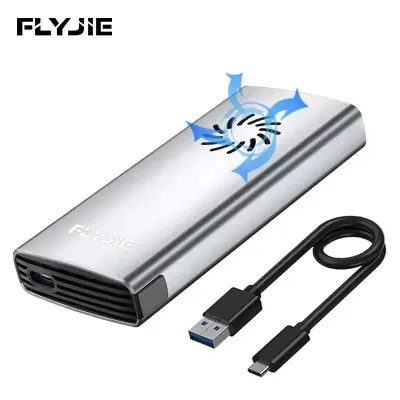
The primary application for ATX fan-style NAS enclosures is in server environments where high-density storage and data processing are required. The "Application" field explicitly lists "Server," confirming that these units are designed to host multiple hard drives and potentially graphics cards for data-intensive tasks. The "HDD support" specifications, which include "M.2 SATA NVME/M.2 SATA NGFF," indicate that these enclosures are capable of supporting the latest high-speed storage protocols. This makes them suitable for modern data centers that require rapid data transfer rates, with some models supporting up to 20Gbps.
The "Front Ports" configuration, typically including "Audio" and "Usb" interfaces, allows for direct connectivity to peripherals, which is useful for local diagnostics or temporary data access. The "Interface" type, often "Type-C," supports high-speed data transfer and power delivery, making it ideal for external storage expansion. The "Support system" compatibility with "WIN7/WIN8/WIN10/IOS/Other Devices" ensures that the enclosure can be integrated into a wide range of operating environments, from legacy systems to modern mobile devices.
For users requiring specific performance characteristics, the "Transfer rate" of 10Gbps or 20Gbps is a key performance metric. This ensures that the enclosure can handle the throughput required by modern applications without becoming a bottleneck. The "Style" of the enclosure, which may include "with Fan," is designed to maintain optimal operating temperatures, preventing thermal throttling during extended periods of high load. The "Color" options, ranging from "White" to "Black" or "Silver," allow buyers to match the enclosure to their existing data center aesthetics, although this is a secondary consideration to performance and reliability.
Supplier Evaluation and Verification Protocols
Evaluating suppliers for ATX fan-style NAS enclosures requires a rigorous due diligence process to ensure reliability and product quality. The first step is to verify the "Brand Name" and "Product Name" to ensure the supplier is an authorized distributor or manufacturer. Brands such as "Beverly" and "Flyjie" are observed in the market, but buyers should not rely solely on brand recognition. Instead, they must verify the "OEM/ODM" capabilities and the "Private Mold" status to understand the supplier's ability to customize products if needed.
The "Supply Ability" of 500 pieces per day is a strong indicator of a supplier's capacity, but buyers should also request references or case studies to confirm that the supplier can consistently meet this capacity without compromising quality. The "Place of Origin" should be cross-referenced with the supplier's business registration to ensure they are a legitimate entity. Additionally, the "Products Status" of "Stock" is preferable for immediate procurement, but buyers should also inquire about the lead time for custom orders if the stock is insufficient.
Quality control is another critical aspect of supplier evaluation. Buyers should request samples to verify the "Sheet Thickness," "Material" quality, and "Packaging Details." The "Condition" of the product must be "New," and the supplier should provide a warranty or guarantee to cover any defects. The "Customization" options should be clearly defined, including the "OEM/ODM" terms and any additional costs associated with custom branding or design changes. Finally, buyers should verify the "Standard" compliance by requesting copies of the "RoHS," "CCC," and "ISO" certificates to ensure the product meets international safety and quality standards.
Long-Term Procurement and Maintenance Considerations
Long-term procurement of ATX fan-style NAS enclosures involves more than just the initial purchase; it requires a strategy for maintenance, scalability, and lifecycle management. The "Single Package" size of 34.5X36.5X28.5 cm for certain models, or 16X10X5 cm for smaller units, impacts storage and shipping logistics. Buyers should plan for efficient warehousing and transportation to minimize costs and damage risks. The "Selling Units" being "Single Item" suggests that the procurement can be flexible, allowing for incremental purchases as needs grow.
Maintenance considerations include the availability of replacement parts, such as fans or drive bays, and the ease of access for upgrades. The "Cable Management" features, such as back cable management, should be designed to facilitate easy maintenance and troubleshooting. The "Type" of the enclosure, whether "Vertical" or "Tower," should be chosen based on the specific cooling requirements of the data center. The "Fan" style is essential for maintaining airflow, and buyers should verify the fan specifications, including noise levels and lifespan, to ensure they meet the operational requirements.
Scalability is another key consideration. The "Motherboard" support of up to four units suggests that the enclosure can be part of a larger cluster. Buyers should plan for future expansion by selecting enclosures that can be easily integrated into a growing network. The "Transfer rate" and "Interface" capabilities should be future-proofed to support increasing data demands. Finally, the "Customization" options should be leveraged to create a standardized fleet of enclosures that are easy to manage and maintain over the long term. By focusing on these long-term factors, buyers can ensure a sustainable and efficient procurement strategy for their ATX fan-style NAS enclosure needs.
FAQs
What materials are used for ATX fan style NAS enclosures?
These enclosures typically use Aluminum or Aluminum Alloy for the chassis. Some models also incorporate Steel plate with a sheet thickness of 0.8mm to ensure structural rigidity and heat dissipation for server applications.
Can these units support multiple motherboards simultaneously?
Yes, specific models are designed to support up to four motherboards. This multi-node capability allows for high-density server configurations within a single vertical or tower style enclosure.
What is the maximum graphics card length supported?
The maximum graphics card length supported ranges from 300 to 400mm. This dimension ensures compatibility with high-performance GPUs needed for transcoding or virtualization tasks inside the enclosure.
Which certifications apply to the base material?
The base material requires FR-Certification for flame retardancy. Additionally, products often comply with RoHS, CCC, and ISO standards to ensure safety and restrict hazardous substances in the manufacturing process.
How fast is the data transfer rate for M.2 drives?
The transfer rate supports up to 10Gbps or 20Gbps depending on the protocol. These enclosures handle M.2 SATA NVME and NGFF drives with dual protocol support for high-speed data access.
What is the minimum order quantity for these enclosures?
The minimum order quantity ranges from 1 to 500 units. This flexibility allows buyers to order single items for testing or bulk quantities up to 500 pieces per day supply capacity.
Are customized packaging options available for these units?
Yes, customized packaging is available and often includes Bubble Bag, Foam, and Color Carton. Suppliers accept custom packaging details to meet specific logistics or branding requirements for the product.